

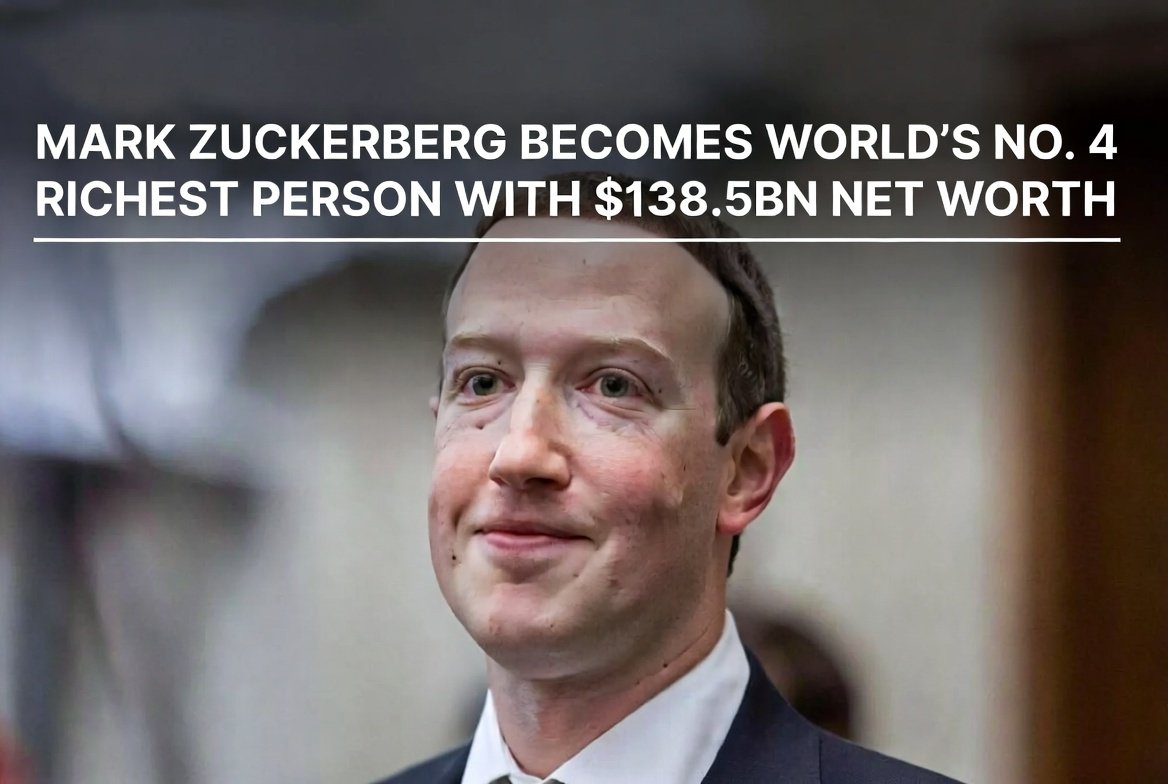
The global billionaire rankings have shifted dramatically as Mark Zuckerberg, CEO and co-founder of Meta Platforms, now ranks as the fourth-richest person in the world, surpassing Amazon founder Jeff Bezos. This move comes on the heels of Amazon’s recent earnings miss and Meta’s continued growth in AI and virtual reality, highlighting the volatility and influence of tech-driven wealth in the 21st century.
This article explores the events leading to this shift, the market factors involved, and the broader implications for tech billionaires and global wealth rankings.
Table of Contents
- Overview of the Wealth Shift
- Amazon’s Earnings Miss and Its Market Impact
- How Meta’s Growth Propelled Zuckerberg’s Net Worth
- Zuckerberg vs. Bezos: Comparing Wealth Sources
- The Tech Billionaires at the Top
- Implications for Investors and the Market
- Frequently Asked Questions
- Conclusion
1. Overview of the Wealth Shift
According to Forbes’ Real-Time Billionaires List, Zuckerberg’s net worth now exceeds $226 billion, putting him ahead of Bezos, whose wealth declined after Amazon’s stock reacted to earnings that fell short of analyst expectations. (forbes.co)
Zuckerberg’s rise underscores a broader trend where stock performance directly influences billionaire rankings, particularly among tech executives whose fortunes are closely tied to their companies’ market valuations.
This is not the first time Zuckerberg has seen dramatic swings in his net worth — he previously experienced rapid fluctuations during the early growth of Meta, the introduction of new AI technologies, and the company’s pivot to the Metaverse.
2. Amazon’s Earnings Miss and Its Market Impact
The key catalyst for this wealth reshuffling was Amazon’s earnings report for the first quarter of 2026, which included two main surprises for investors:
- Earnings fell short of Wall Street expectations. Analysts projected higher revenue growth than Amazon reported, triggering concerns about slowing momentum.
- Capital expenditures were significantly higher than anticipated. Amazon announced plans to invest roughly $200 billion in infrastructure, logistics, and new technologies in 2026, causing investor caution.
As a result, Amazon’s stock price fell over 9% immediately after the report, wiping out an estimated $16 billion from Bezos’s net worth. This decline allowed Zuckerberg, whose Meta shares appreciated during the same period, to move past Bezos in the global rankings.
This scenario demonstrates how short-term market fluctuations can temporarily reorder the wealth hierarchy among billionaires, especially those heavily invested in publicly traded tech companies.
3. How Meta’s Growth Propelled Zuckerberg’s Net Worth
Meta’s continued investment in AI, virtual reality, and the Metaverse has attracted investor confidence. Zuckerberg has positioned Meta as a leader in emerging technologies, resulting in:
- Stock appreciation fueled by AI innovations and Meta’s growing ad revenue streams.
- Investor optimism about future growth in virtual reality platforms and immersive digital experiences.
- Strategic partnerships that enhance Meta’s technology stack, including collaborations with AI firms and international developers.
These factors have increased the market value of Meta, directly impacting Zuckerberg’s net worth. Analysts estimate that over 85% of his wealth is tied to Meta stock, emphasizing the connection between corporate performance and personal fortunes.
4. Zuckerberg vs. Bezos: Comparing Wealth Sources
| Factor | Mark Zuckerberg | Jeff Bezos |
| Primary Wealth Source | Meta Platforms (Facebook, Instagram, WhatsApp, VR) | Amazon e-commerce, AWS, investments |
| Net Worth (Feb 2026) | ~$226 billion | ~$224 billion |
| Key Drivers | AI, Metaverse expansion, advertising growth | Amazon earnings, logistics expansion, cloud services |
| Volatility | Moderate to high (tech sector swings) | High (earnings-sensitive, e-commerce cycles) |
| Public Engagement | Active in tech innovation, philanthropy, AI ethics | Philanthropy, space ventures, investment strategy |
The comparison shows that while Bezos’s wealth is spread across multiple ventures, Zuckerberg’s net worth is highly concentrated in Meta, which can both amplify gains and increase exposure to market volatility.
5. The Tech Billionaires at the Top
Despite Zuckerberg’s new position at No. 4, the top of the billionaire list remains dominated by tech innovators:
- Elon Musk – CEO of Tesla and SpaceX, remains the richest person globally with a net worth exceeding $800 billion.
- Larry Page – Google co-founder, continues to hold the second spot.
- Sergey Brin – Alphabet co-founder, ranks third.
- Mark Zuckerberg – Meta CEO, newly fourth.
- Jeff Bezos – Amazon founder, now fifth.
This concentration highlights the sustained influence of technology and innovation on global wealth creation.
6. Implications for Investors and the Market
Zuckerberg overtaking Bezos is not just a headline—it reflects broader market dynamics:
- Billionaire wealth is highly sensitive to stock market trends. Even established figures can experience substantial changes in net worth overnight.
- Tech dominance drives wealth creation. Companies investing in AI, virtual reality, and emerging tech can see rapid investor valuation growth.
- Investor sentiment impacts billionaire rankings. Earnings misses or surprise announcements can instantly shift the wealth leaderboard.
For markets, this emphasizes the interconnected nature of tech performance and public perception, where corporate strategies and innovation pipelines directly impact valuation.
7. Frequently Asked Questions
Q: How did Mark Zuckerberg surpass Jeff Bezos in net worth?
A: A combination of Meta’s stock growth and Amazon’s earnings miss reduced Bezos’s wealth, allowing Zuckerberg to overtake him.
Q: Who is still the richest person in the world?
A: Elon Musk remains No. 1 globally, with a net worth exceeding $800 billion.
Q: Does Zuckerberg’s wealth depend entirely on Meta?
A: About 85% of his wealth comes from Meta stock, with the remainder from other investments and assets.
Q: Will these rankings change frequently?
A: Yes — billionaire rankings are highly dynamic and can fluctuate with market performance and corporate developments.
Q: How significant is AI in Meta’s growth?
A: AI is a major driver of investor confidence, revenue growth, and Meta’s long-term valuation, directly impacting Zuckerberg’s net worth.
8. Conclusion
Mark Zuckerberg’s rise to No. 4 richest person in the world illustrates the volatility and power of tech-driven wealth. While Bezos remains a titan, short-term market factors such as Amazon’s earnings miss can result in dramatic shifts.
Zuckerberg’s concentrated holdings in Meta, coupled with strategic investments in AI and virtual reality, underscore how innovation and market positioning continue to shape billionaire rankings. This development also highlights the broader impact of tech companies on global wealth, investor sentiment, and economic influence.
In an era where stock performance and emerging technologies define fortunes, Zuckerberg’s ascent demonstrates that the hierarchy of global wealth is increasingly fluid, with opportunity and risk intertwined for those at the pinnacle of tech innovation.